Chapter 1: Before Universities Existed
“Education was never merely the transfer of information. Long before universities, libraries, examinations, degrees, and academic titles existed, human beings developed sophisticated ways of preserving knowledge, training apprentices, cultivating judgment, and transmitting accumulated wisdom from one generation to another.”
The modern university is one of humanity's great institutional achievements, but the university did not invent learning, scholarship, teaching, research, or mastery. For thousands of years before the emergence of medieval European universities, civilizations had already developed elaborate systems for educating priests, scribes, physicians, administrators, philosophers, mathematicians, architects, craftsmen, military leaders, and religious teachers.
Indeed, some of the oldest civilizations understood something that remains highly relevant today: knowledge has to be transmitted, practiced, interpreted, protected, and eventually renewed.
The university is therefore better understood as one stage in a much longer history of organized human learning.
Long before students walked through university gates, human communities had already developed teachers and learners, masters and apprentices, schools and libraries, oral traditions and written records, examinations and professional standards, intellectual communities and traditions of scholarship. Ancient Egypt developed scribal education. Mesopotamia created institutions for training scribes and preserving written knowledge. Greek thinkers established philosophical schools that influenced Western intellectual history for centuries. Alexandria became an extraordinary center of scholarship and textual research. Rome developed educational traditions that connected language, rhetoric, law, administration, and public life. Jewish communities developed powerful traditions of textual interpretation, memorization, debate, and rabbinical learning.
These traditions were not identical, and they should not be romanticized. Ancient education was often restricted by class, gender, citizenship, occupation, wealth, and social status. Access to formal learning could be highly unequal. Nevertheless, these societies demonstrate that mastery as a human aspiration is considerably older than the university itself.
The history of mastery therefore begins not with the medieval campus but with the ancient teacher.
1. The Human Need to Preserve Knowledge
Every human generation inherits a world it did not create.
Children are born into languages they did not invent, cultural practices they did not establish, technologies they did not discover, religious traditions they did not originate, and social institutions that existed before them.
Human civilization depends upon the ability to transmit accumulated knowledge.
Without knowledge transmission, every generation would have to begin again.
A farmer would have to rediscover agricultural practices. A builder would have to rediscover structural principles. A physician would have to rediscover treatments. A sailor would have to rediscover navigation. A religious community would have to reconstruct its traditions. A political society would have to reinvent administrative practices.
The development of language, teaching, imitation, storytelling, ritual, apprenticeship, writing, and eventually formal schooling enabled human societies to overcome this problem.
This makes education one of civilization's fundamental technologies.
Writing greatly expanded this capacity. Once knowledge could be recorded, it could potentially survive the death of the person who possessed it. Yet writing did not eliminate teachers. In many ancient societies, the ability to read and write was itself a specialized mastery requiring years of training.
This creates a recurring pattern in the history of education:
Knowledge is preserved through people, practices, institutions, and texts.
A text can preserve information.
A teacher can explain it.
An apprentice can practice it.
A community can test it.
A master can refine it.
A subsequent generation can extend it.
Thus, the transmission of knowledge is never simply a matter of copying information from one mind to another.
It is a social and intellectual process.
2. Ancient Egypt: The Civilization of the Scribe
6
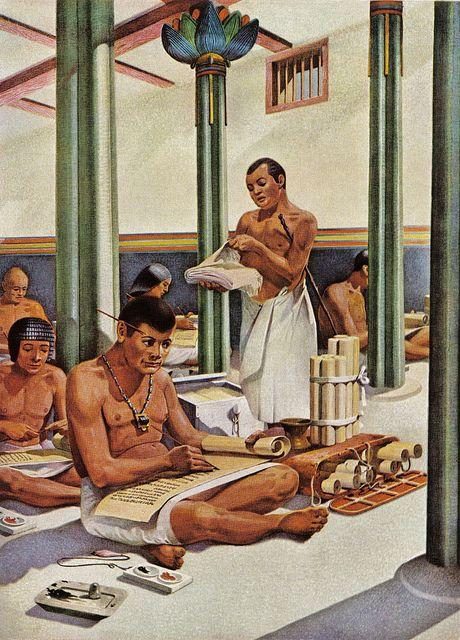
Among the earliest civilizations to develop sophisticated systems of formal knowledge transmission was ancient Egypt.
Egyptian civilization developed along the Nile over several millennia and produced remarkable achievements in architecture, administration, mathematics, medicine, literature, religion, engineering, and writing. The ability to maintain such a complex civilization depended partly upon specialized groups capable of recording, calculating, organizing, and transmitting information.
The scribe occupied a particularly important position.
Scribes were not simply writers in the modern sense. They could function as administrators, accountants, officials, record keepers, copyists, and intellectual specialists. Their work supported taxation, agriculture, temple administration, legal transactions, government, military organization, and economic activity (Baines, 1983; Lichtheim, 1973).
The development of scribal education represents one of the earliest recognizable examples of professional knowledge transmission.
2.1 Becoming a Scribe
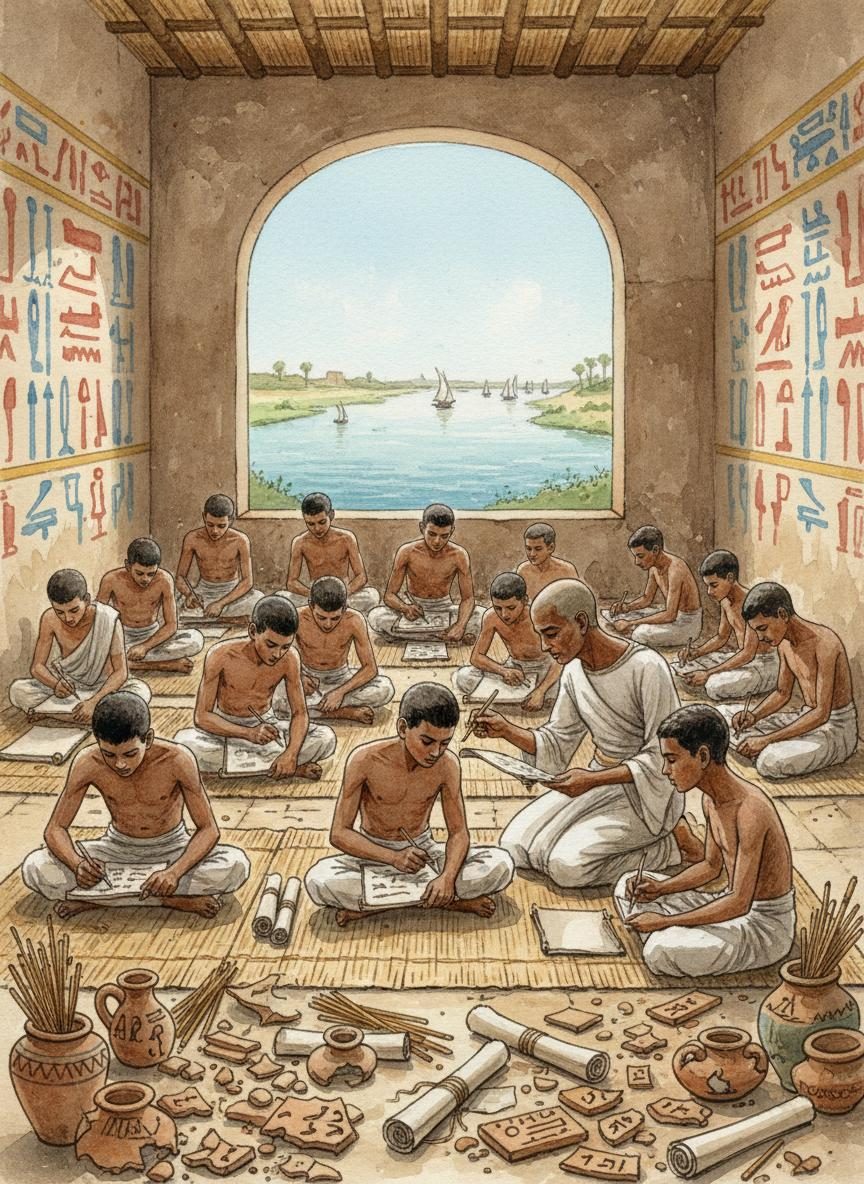
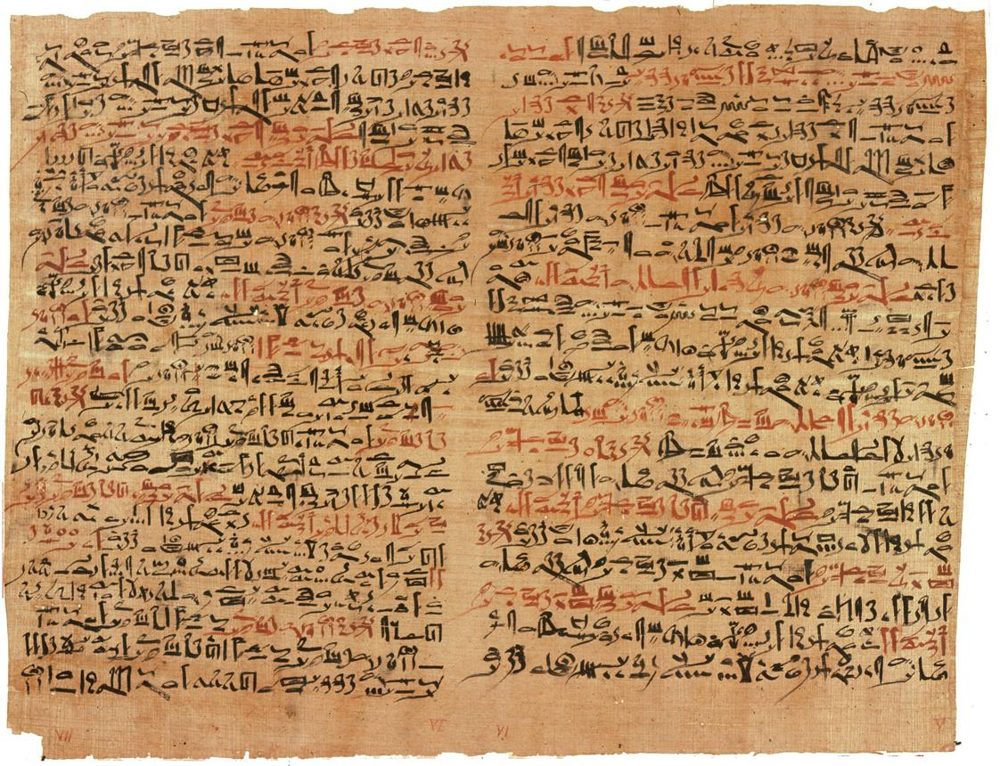
Literacy in ancient Egypt was not universal. The ability to read and write hieroglyphic, hieratic, and later demotic scripts required specialized training.
Young learners had to acquire vocabulary, signs, conventions, formulas, numerical systems, and administrative practices. They also had to develop the physical skills necessary for writing with the materials available at the time.
Education therefore required repetition.
The learner copied texts.
The teacher corrected errors.
The learner copied again.
This process may appear elementary by modern standards, but it embodies a fundamental principle of mastery:
competence develops through disciplined practice accompanied by correction.
Ancient scribal education also illustrates another important principle: knowledge is often inseparable from professional identity.
To become a scribe was not simply to learn writing.
It was to enter a social and occupational world.
The student was being prepared for a particular role within society.
2.2 The Teacher and the Student
Ancient Egyptian educational texts frequently emphasize the relationship between teacher and learner, discipline, diligence, and the value of knowledge.
The Instruction of Ptahhotep, one of the best-known examples of ancient Egyptian wisdom literature, presents moral and practical advice concerning conduct, speech, listening, self-control, social relationships, and leadership (Lichtheim, 1973).
Whether or not every instruction can be treated as a direct description of classroom practice, the literature demonstrates that Egyptian intellectual culture connected education with moral formation.
The learner was not expected merely to acquire information.
The learner was expected to become a certain kind of person.
This distinction is central to the history of mastery.
Education asks two different questions:
What should a person know?
and
What kind of person should that knowledge help the individual become?
The ancient Egyptians repeatedly connected wisdom with proper conduct, restraint, listening, and social responsibility.
3. Knowledge, Memory, and Egyptian Civilization
Egyptian civilization depended heavily upon continuity.
Temples maintained religious knowledge.
Administrators maintained bureaucratic records.
Craftspeople transmitted specialized techniques.
Architects and builders transferred construction knowledge.
Priests transmitted ritual traditions.
Scribes preserved written materials.
Physicians transmitted medical knowledge.
These activities reveal that ancient Egyptian education was not one unified system. Instead, learning occurred through several interconnected mechanisms.
These included:
- formal scribal instruction;
- family transmission;
- occupational apprenticeship;
- temple education;
- copying and memorization;
- oral instruction;
- observation;
- supervised practice;
- and textual preservation.
The resulting educational culture was therefore broader than the formal school.
This is an important lesson for modern discussions of education.
A society's educational system is larger than its schools.
People learn through families, workplaces, communities, religious institutions, professional organizations, mentors, and practical experience.
The modern university is only one component of this larger human ecosystem of learning.
4. Mesopotamia: The Birthplace of Scribal Schools
6
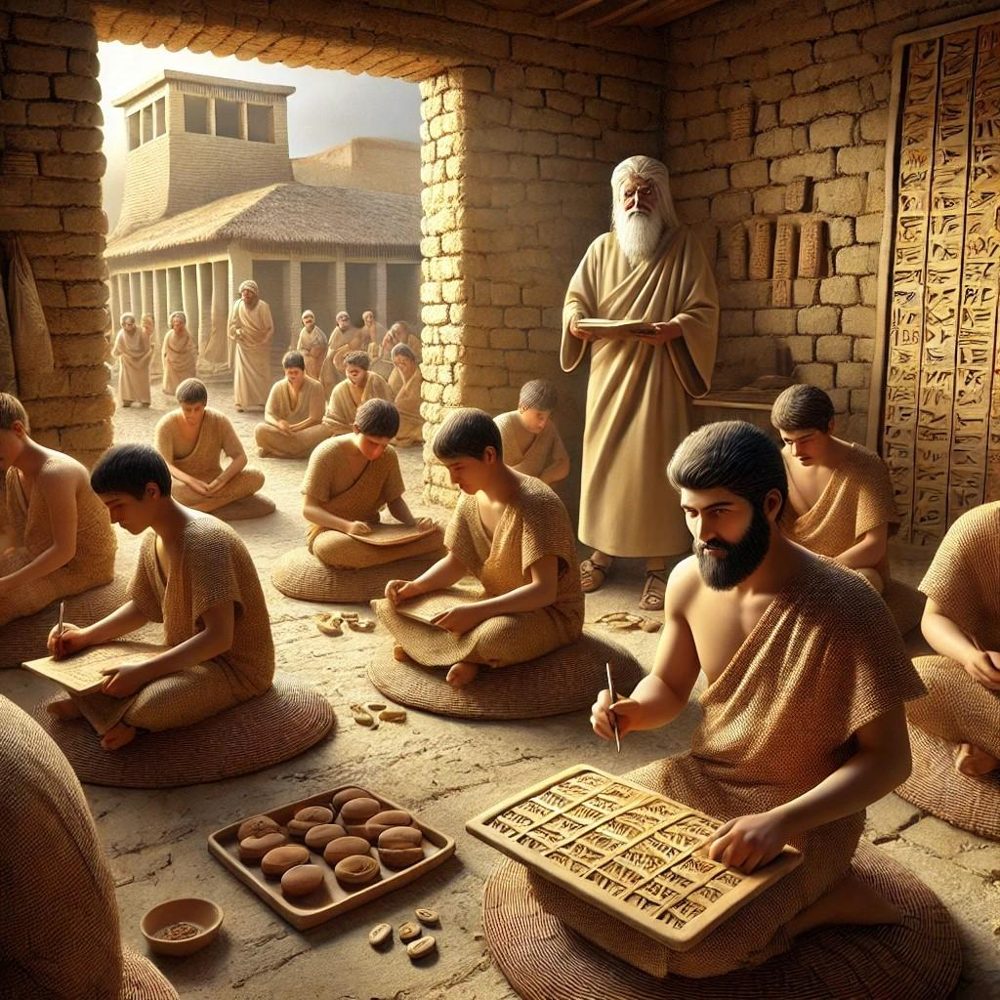
If ancient Egypt provides one of the earliest examples of organized scribal education, Mesopotamia provides another extraordinary example.
The civilizations of Mesopotamia developed between and around the Tigris and Euphrates rivers. Sumerian, Akkadian, Babylonian, and Assyrian societies produced extensive written traditions.
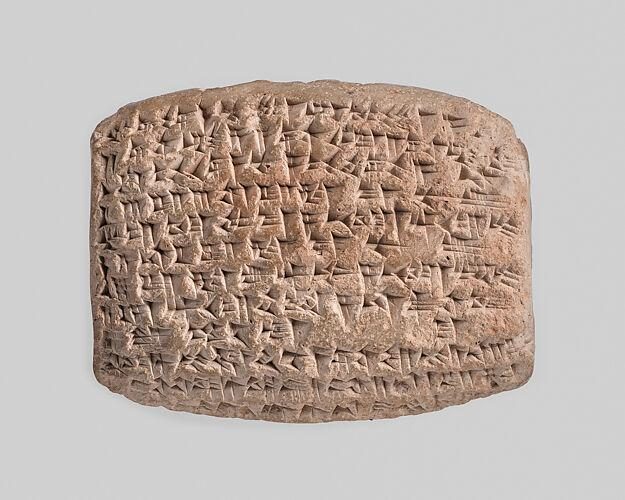
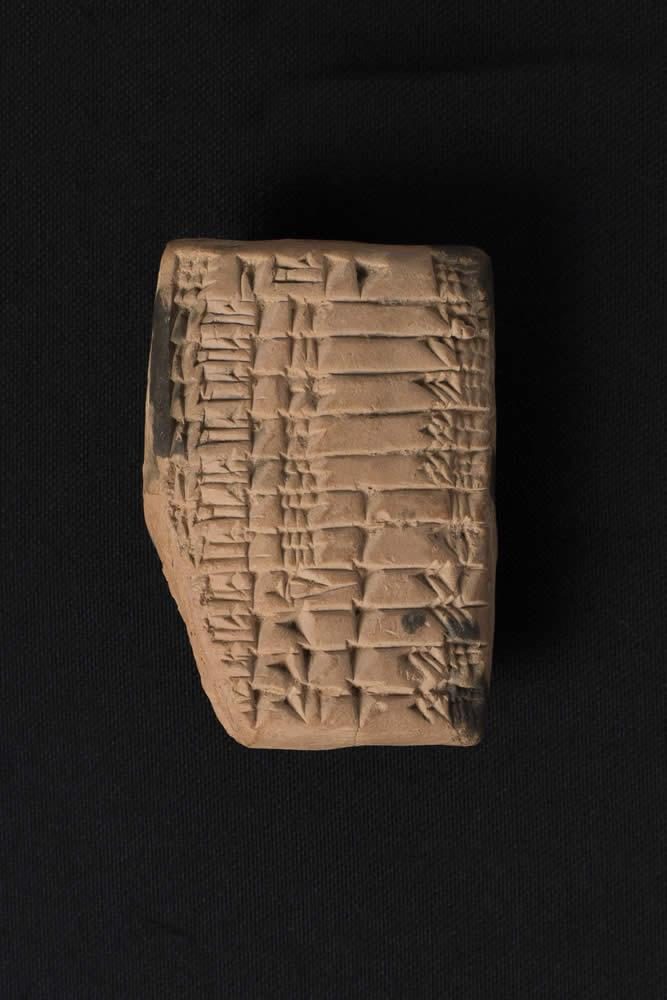
Cuneiform became one of humanity's earliest writing systems.
The ability to read and produce cuneiform was a specialized skill.
As writing became essential to administration, commerce, law, religion, scholarship, and government, societies developed institutions and practices for training scribes.
The Mesopotamian edubba, traditionally translated as a "tablet house" or scribal school, represents an important stage in this development (Kramer, 1963; Van De Mieroop, 2016).
5. The Edubba and the Making of a Scribe
The student in a Mesopotamian scribal environment did not simply read textbooks.
There were no modern textbooks in the contemporary sense.
Instead, students worked with tablets, word lists, sign lists, model documents, literary compositions, mathematical exercises, and administrative materials.
They copied.
They memorized.
They practiced.
They made mistakes.
They were corrected.
They repeated.
The process was labor intensive.
This is precisely what makes Mesopotamian education so significant to the history of mastery.
Learning was understood as something requiring time and disciplined repetition.
The student gradually moved from simple exercises toward more sophisticated compositions.
Scholars have identified numerous school tablets that provide evidence of lexical lists, mathematical exercises, literary texts, and model documents. These materials indicate that scribal education involved structured progression rather than random exposure to information (Nissen, Damerow, & Englund, 1993).
6. Learning Through Lists
One particularly fascinating characteristic of Mesopotamian scholarship was the use of lists.
Lists could organize:
- words;
- signs;
- objects;
- professions;
- animals;
- plants;
- geographic information;
- mathematical relationships;
- and other categories of knowledge.
From a modern perspective, lists can appear simplistic.
They were not.
They represented an intellectual technology.
Classification enables human beings to organize complexity.
A learner who knows that different phenomena belong to different categories can retrieve and manipulate information more effectively.
The Mesopotamian tradition therefore demonstrates that knowledge mastery involves not only accumulation but organization.
Knowledge becomes more useful when it is structured.
This principle remains important today.
Modern databases, libraries, search engines, taxonomies, ontologies, metadata systems, and artificial-intelligence models all depend upon forms of organization and categorization.
The ancient tablet and the modern database are obviously not equivalent technologies, but both reflect a fundamental human problem:
How can enormous quantities of information be organized so that human beings can retrieve and use it?
7. Mathematics and Mastery in Mesopotamia
Mesopotamian scribes also developed sophisticated mathematical knowledge.
Babylonian mathematical texts demonstrate knowledge involving arithmetic, geometry, algebraic procedures, and practical calculations (Robson, 2008).
Mathematical mastery was not simply theoretical.
It could serve practical purposes involving:
- land measurement;
- construction;
- accounting;
- taxation;
- trade;
- wages;
- agricultural production;
- and administrative calculations.
This relationship between theory and application is another recurring feature of mastery.
A person does not fully master mathematics merely by memorizing formulas.
Mastery emerges when mathematical principles can be applied accurately to real problems.
8. Greece: From Craft Knowledge to Philosophical Inquiry
7
Classical Greece introduced new dimensions to the history of education.
Greek education was diverse and changed significantly over time and between city-states. Nevertheless, Greek intellectual culture contributed profoundly to Western traditions of philosophy, rhetoric, mathematics, science, ethics, political thought, and education.
Greek thinkers increasingly asked not only how knowledge could be transmitted but also:
- What is knowledge?
- What is truth?
- What is virtue?
- What is the good life?
- What should education accomplish?
- How should reason be cultivated?
- What is the relationship between knowledge and character?
These questions transformed education from simple occupational preparation into a philosophical subject.
9. The Greek Concept of Paideia
One of the most important concepts in ancient Greek education was paideia.
Paideia is difficult to translate into one English word. It can encompass education, culture, formation, intellectual development, and cultivation of the person.
It represented an ideal of human formation rather than simply vocational training.
Werner Jaeger's influential study Paideia emphasized the importance of education and cultural formation in ancient Greek civilization (Jaeger, 1945).
Greek education could therefore involve:
- physical development;
- music;
- poetry;
- grammar;
- rhetoric;
- philosophy;
- civic education;
- moral development;
- and intellectual cultivation.
The objective was not necessarily to create a narrowly specialized worker.
It was to cultivate a capable member of society.
This concept would influence later educational traditions for centuries.
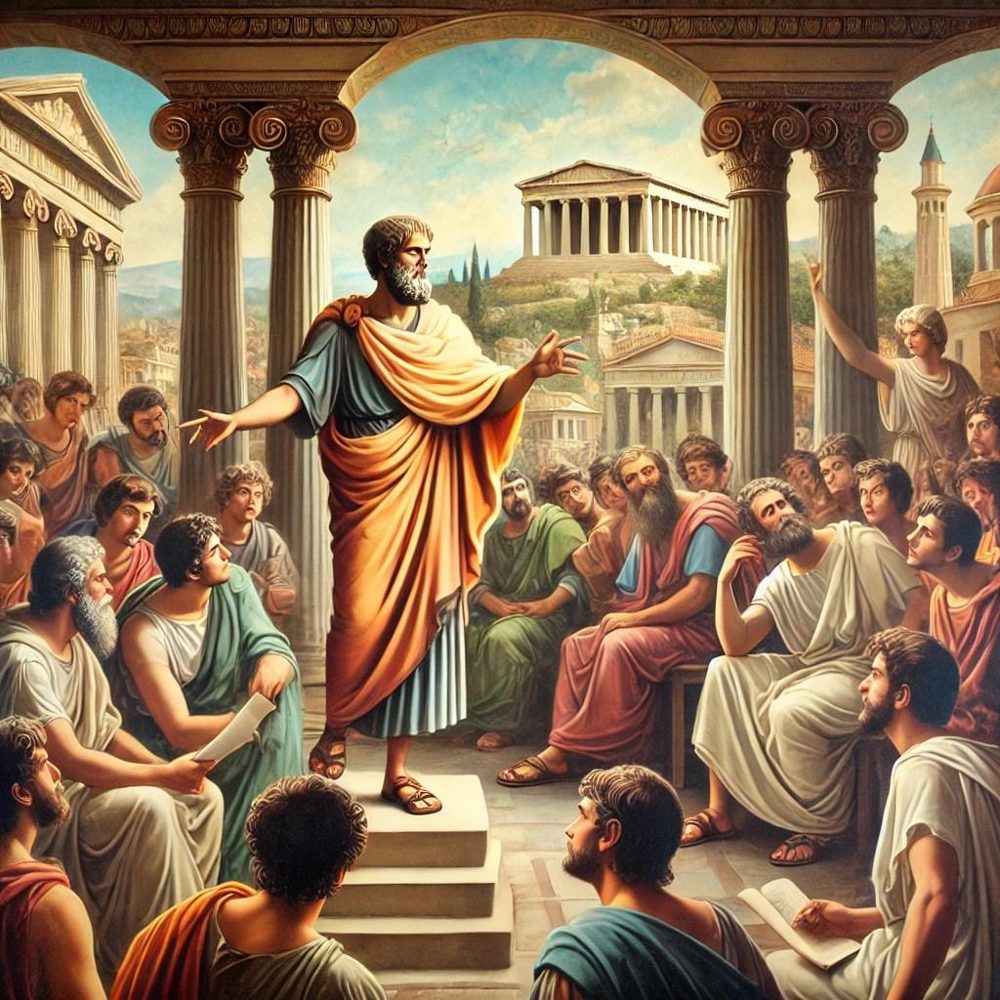
10. Socrates and the Master Teacher
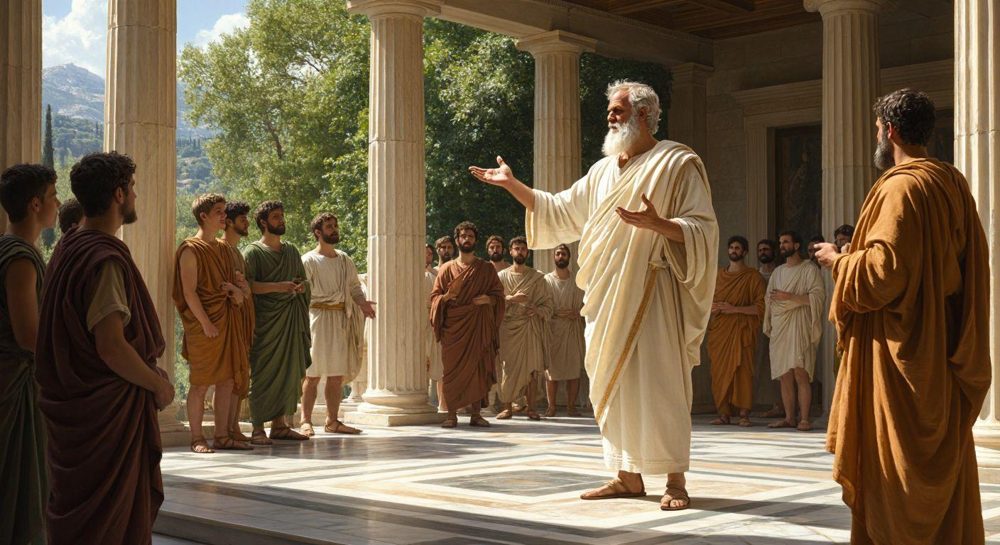
The figure of Socrates occupies a unique place in the history of education.
Socrates left no writings of his own. Our knowledge of him comes principally through later sources, especially Plato and Xenophon.
In Plato's dialogues, Socrates frequently teaches not by delivering conventional lectures but by asking questions.
This approach is commonly called the Socratic method.
The teacher asks.
The learner responds.
The response is examined.
Assumptions are exposed.
Contradictions emerge.
Further questions follow.
The learner gradually discovers that apparently simple questions can be extraordinarily difficult.
This approach contains a profound theory of mastery.
The beginning of wisdom may involve recognizing the limits of one's own knowledge.
The Socratic teacher therefore does not merely provide answers.
The teacher teaches the learner how to think.
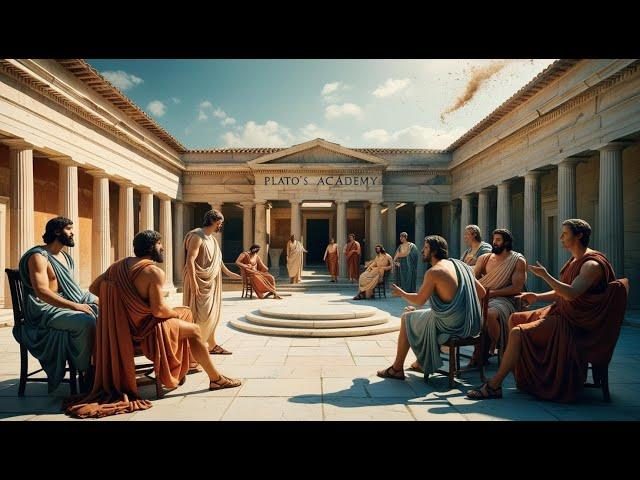
11. Plato's Academy
6
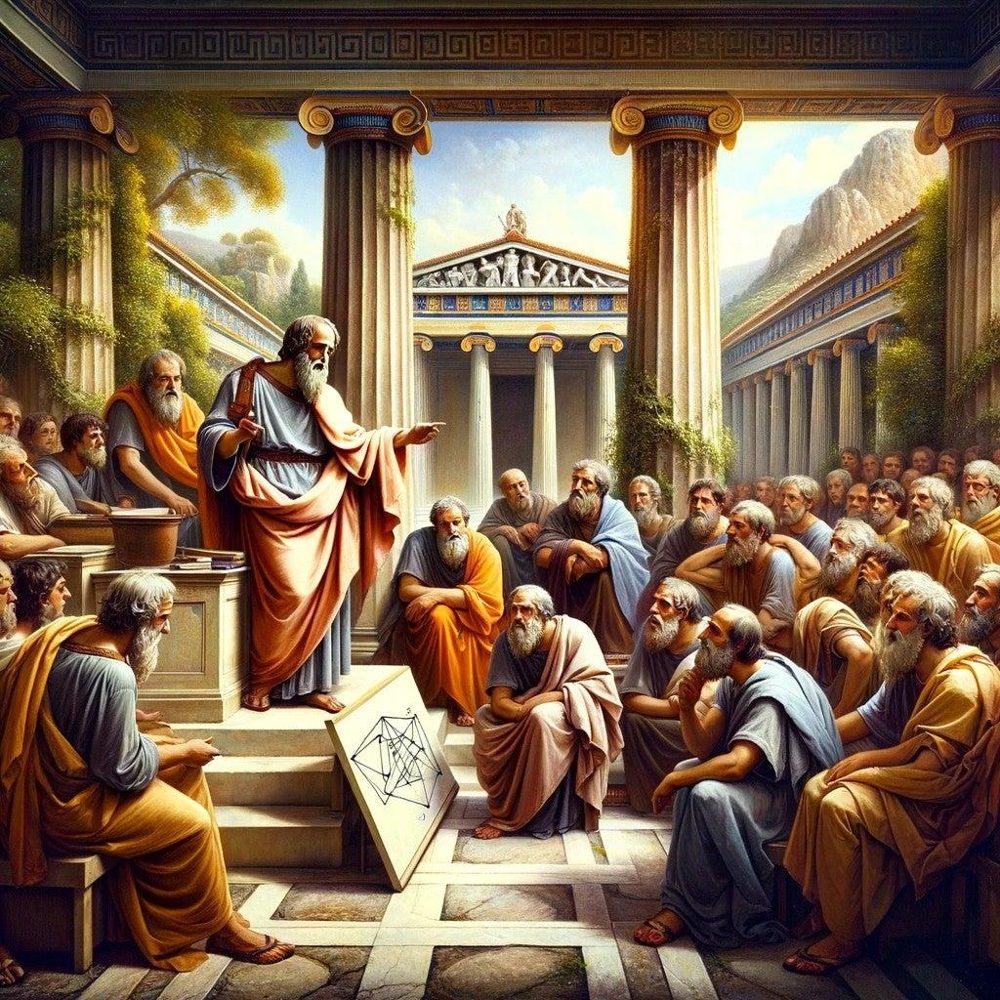
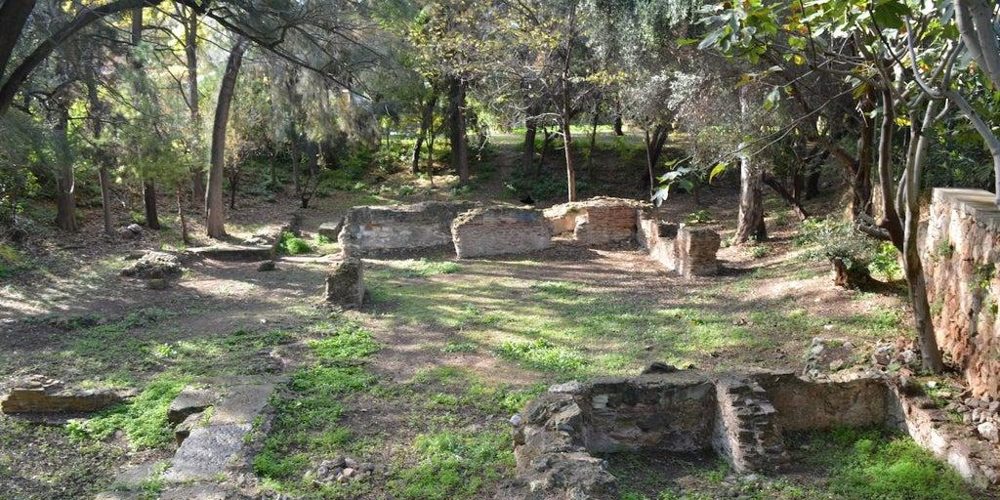
Plato established the Academy in Athens in the fourth century BCE.
It became one of the most influential intellectual institutions of antiquity.
The Academy should not be imagined as an exact equivalent of a modern university. It lacked many characteristics of contemporary universities, including modern degrees, faculties, standardized curricula, and formal academic administration.
Nevertheless, it represented an organized intellectual community devoted to philosophical and mathematical inquiry.
Plato's educational thought placed extraordinary emphasis on the transformation of the learner.
In the Republic, education is connected with turning the soul toward what is true and good rather than simply filling the mind with information (Plato, trans. 2008).
This is particularly relevant to the theme of mastery.
For Plato, education should not merely add information.
It should change how the learner sees reality.
12. Plato: Education Beyond Information
The distinction between information and wisdom is therefore not a modern invention.
Plato's philosophy repeatedly challenges the assumption that possessing information automatically makes someone wise.
A person may know facts without understanding their significance.
A person may possess technical ability without possessing moral judgment.
A person may be persuasive without being truthful.
A person may be intelligent without being wise.
Plato's educational vision therefore emphasizes intellectual formation.
The learner must gradually develop the capacity to distinguish appearance from reality and opinion from knowledge (Plato, trans. 2008).
This is remarkably relevant to the contemporary information environment.
The modern individual has access to vastly more information than an ancient Greek philosopher could have imagined.
Yet the fundamental problem remains:
How does a person distinguish knowledge from opinion, evidence from assertion, and wisdom from information?
The technology has changed.
The educational challenge remains.
13. Mathematics and Intellectual Discipline
Plato placed substantial emphasis on mathematical study.
In the Republic, mathematical disciplines are associated with turning the mind toward abstract reasoning and intellectual development (Plato, trans. 2008).
Mathematics offered a form of disciplined thought.
It required precision.
It required logical consistency.
It required abstraction.
It required the learner to move beyond immediate sensory appearances.
This illustrates an important educational principle:
Mastery in one domain can cultivate habits of thought transferable to other domains.
Learning mathematics is not valuable only because people may later use mathematical calculations.
It can also develop habits involving:
- precision;
- logical reasoning;
- abstraction;
- systematic analysis;
- and disciplined problem-solving.
14. Plato's View of the Teacher
The teacher in Platonic education is not simply an information dispenser.
The teacher serves as a guide.
The learner must participate actively.
This distinction remains central to contemporary educational theory.
A lecture can transmit information.
A teacher can also cultivate inquiry.
These are different functions.
The first asks:
What information should the student receive?
The second asks:
What intellectual capacities should the student develop?
Mastery-oriented education places greater emphasis on the second question.
15. Aristotle's Lyceum
7
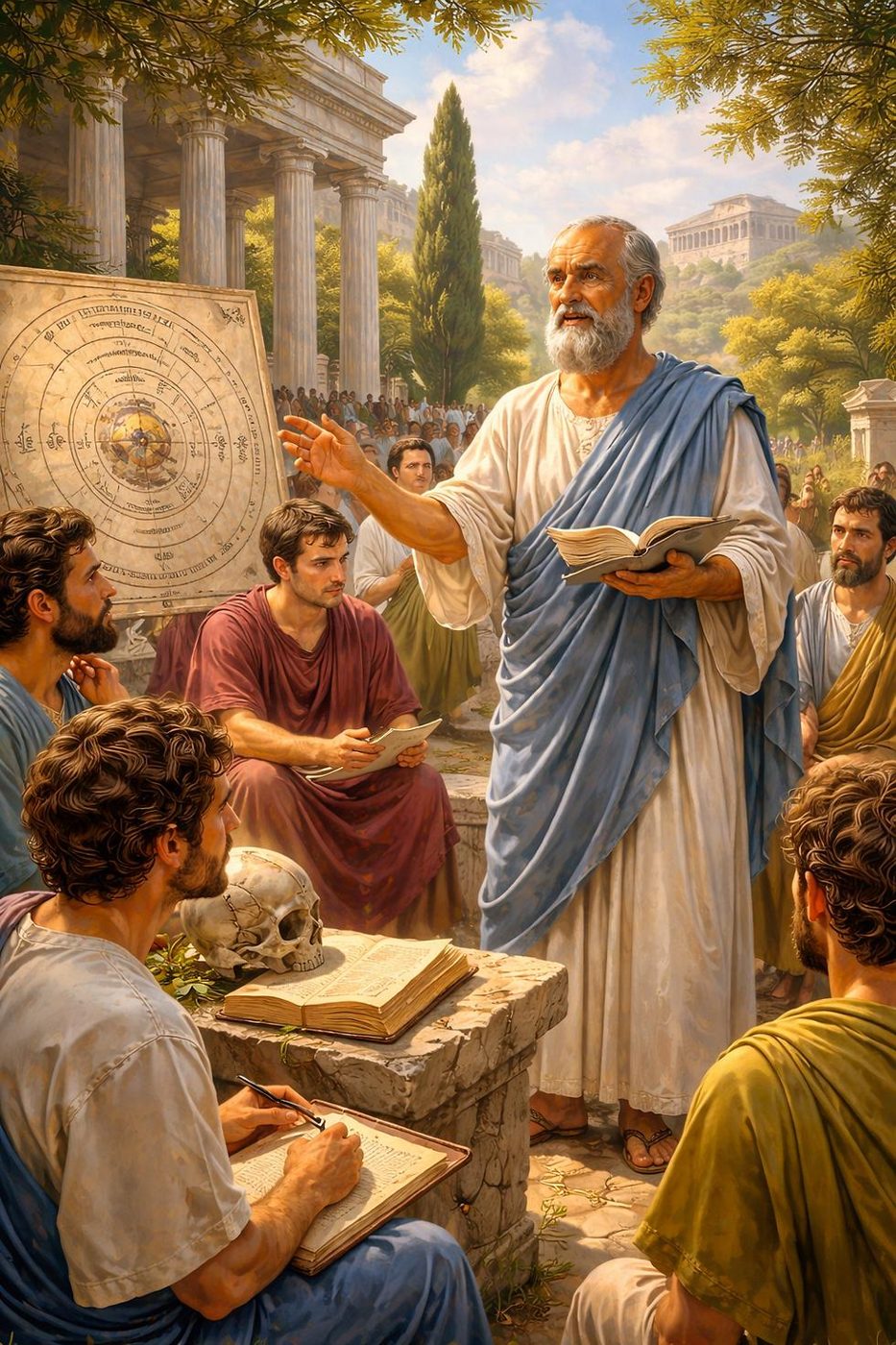
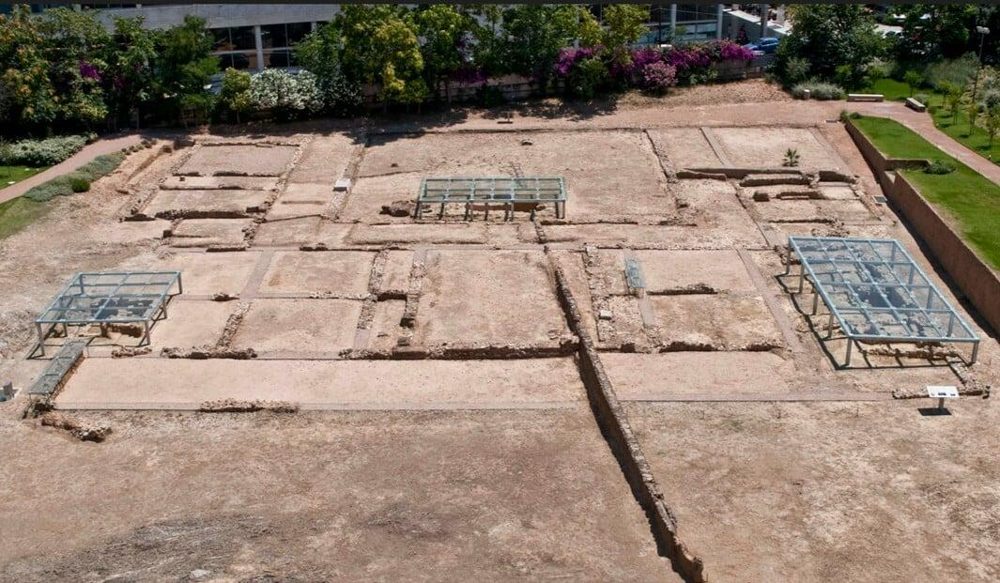
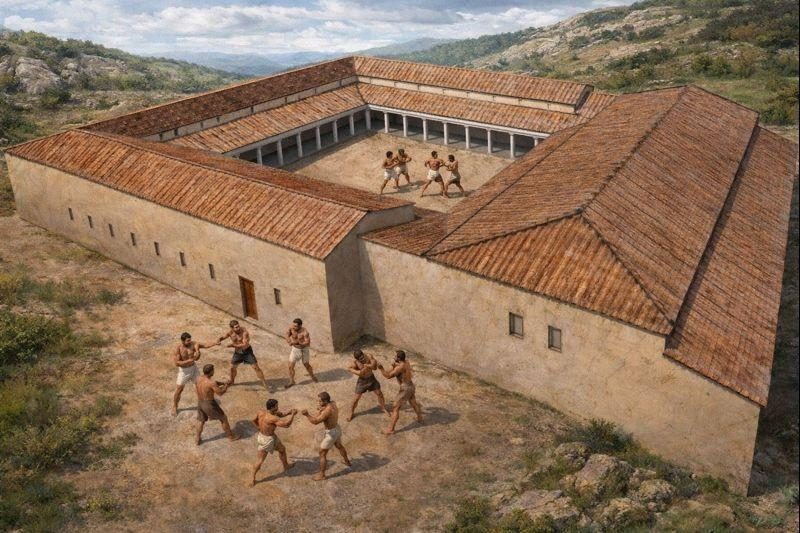
Aristotle, a student of Plato, established the Lyceum in Athens.
His intellectual interests were extraordinarily broad.
He studied and wrote about:
- philosophy;
- logic;
- ethics;
- politics;
- biology;
- physics;
- metaphysics;
- rhetoric;
- poetry;
- and natural phenomena.
The Lyceum became an important center of intellectual inquiry.
Aristotle's approach also illustrates an important development in the history of mastery: systematic investigation of the natural and social world.
Aristotle did not merely ask abstract philosophical questions. He also collected observations, classified organisms, analyzed constitutions, studied political systems, and examined natural phenomena.
Although many Aristotelian conclusions have since been rejected or revised, his commitment to systematic inquiry had an enormous historical influence.
16. Aristotle and the Classification of Knowledge
Aristotle's work contributed to the differentiation and organization of intellectual disciplines.
The modern university is built around disciplines such as:
- biology;
- physics;
- political science;
- philosophy;
- ethics;
- rhetoric;
- literary studies.
These disciplines have changed substantially over time, but Aristotle's work demonstrates an early attempt to organize human inquiry into coherent fields.
Mastery requires specialization.
But specialization creates another danger: intellectual fragmentation.
A person can become highly knowledgeable within a narrow area while understanding little about the larger system.
Aristotle's extraordinarily broad intellectual interests provide an alternative model.
He combined specialized investigation with philosophical reflection.
This suggests that advanced mastery requires both depth and breadth.
17. Aristotle and Practical Wisdom
Aristotle's concept of phronesis, often translated as practical wisdom, is especially important.
Practical wisdom differs from technical skill.
A technically skilled person knows how to perform an activity.
A practically wise person understands what should be done in a particular situation and why.
For Aristotle, ethical action depends partly upon the ability to deliberate appropriately about circumstances (Aristotle, trans. 1999).
This distinction remains fundamental to professional life.
A lawyer may know legal rules but still need judgment about how they apply to a particular client.
A physician may know clinical guidelines but still need to understand the individual patient.
A manager may know organizational theory but still need judgment about a specific employee or crisis.
A researcher may know methodology but still need to determine which design is appropriate for a particular research question.
Mastery therefore requires more than procedural competence.
It requires judgment.
18. The Importance of Observation
Aristotle's approach also illustrates another important feature of advanced learning: observation.
The learner must encounter the world.
Theory must be tested against experience.
Ideas must be compared with evidence.
This is one reason the development of scientific inquiry would eventually become so important.
Although Aristotle's science does not conform to modern experimental standards, his classification and observation of nature contributed to a long intellectual tradition concerned with systematic inquiry.
Mastery therefore develops through an interaction between:
theory and experience
ideas and evidence
reflection and practice
19. Alexandria: The Library and the Research Community
5
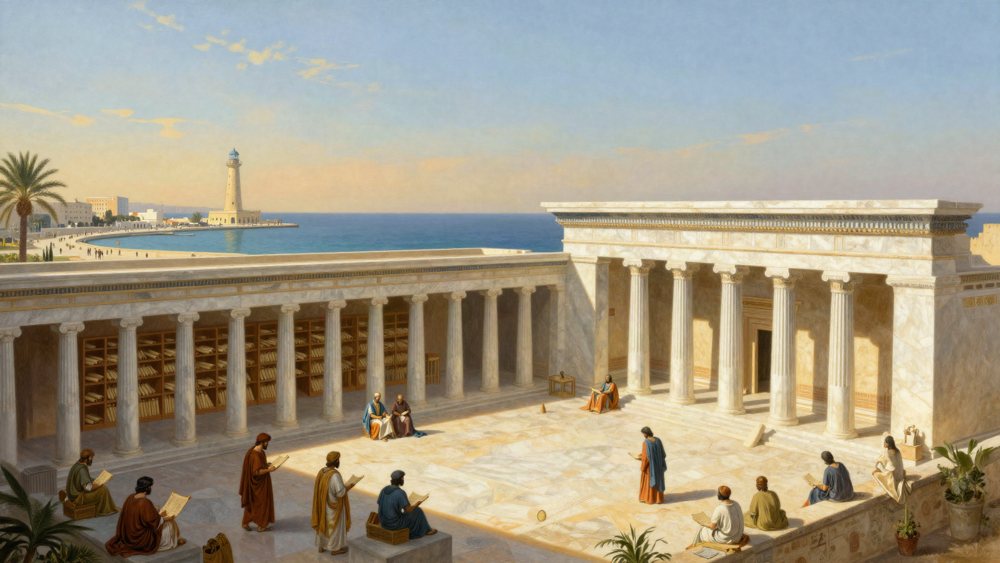
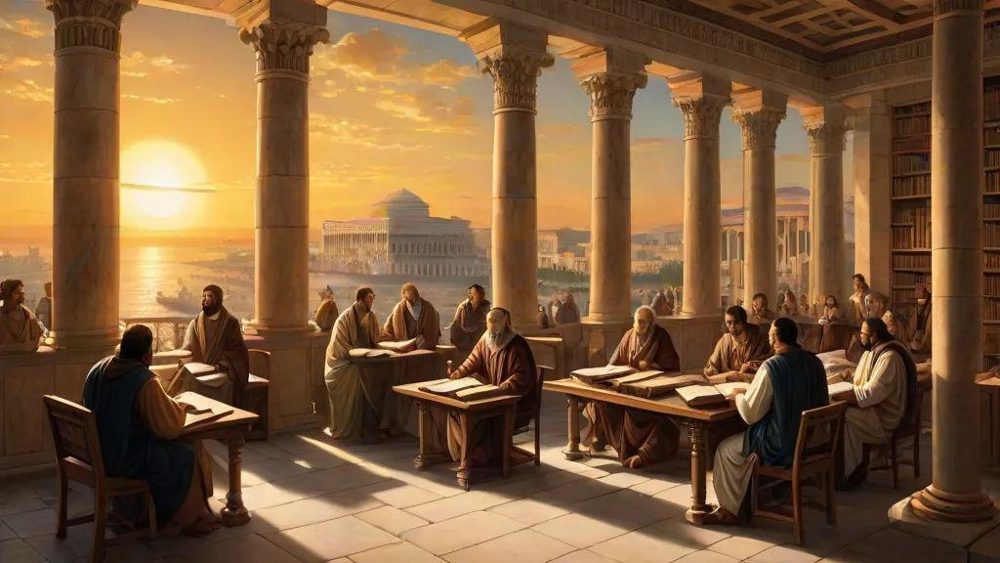
Alexandria became one of the most significant intellectual centers of the Hellenistic world.
Founded by Alexander the Great in 331 BCE, Alexandria developed into a major center of commerce, culture, science, literature, and scholarship.
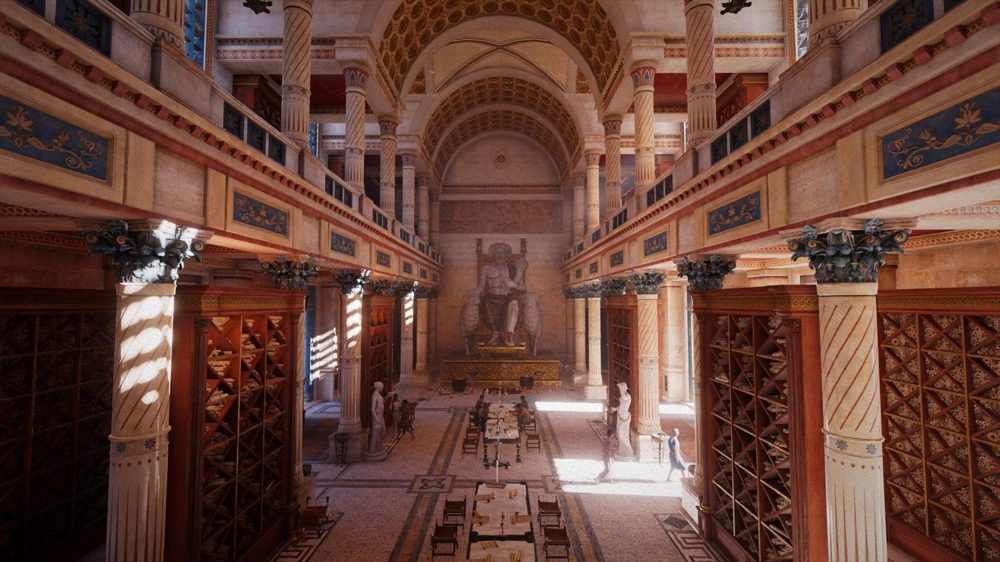
The Library of Alexandria has become legendary.
Popular accounts sometimes portray it as a single enormous building containing all ancient knowledge before being destroyed in one catastrophic event. The historical reality is considerably more complicated. Evidence concerning the library's precise organization, holdings, and destruction is incomplete, and scholars continue to debate aspects of its history (Canfora, 1989; MacLeod, 2000).
Nevertheless, Alexandria unquestionably became an important center of scholarship.
Its significance lies not merely in books.
It lies in the creation of an intellectual environment in which scholars could work with texts, mathematics, astronomy, medicine, geography, philosophy, and other disciplines.
20. The Mouseion
The Mouseion of Alexandria was associated with scholarly activity and is often described as an institution or research community connected with the Ptolemaic court.
Scholars could devote themselves to research, writing, teaching, textual criticism, and intellectual inquiry.
This represents another important stage in the history of mastery.
The scholar was no longer simply a person who possessed inherited knowledge.
The scholar became someone who could compare, analyze, correct, organize, and extend knowledge.
This is a crucial transition.
Knowledge transmission becomes knowledge production.
21. Textual Scholarship in Alexandria
Alexandrian scholars were deeply involved in preserving and editing literary texts.
One problem confronting ancient scholars was that manuscripts could contain differences, copying errors, additions, omissions, and variant readings.
The scholarly task therefore included determining the most reliable text.
This practice represents an early form of what we might now call critical scholarship.
The scholar had to ask:
- Which version is older?
- Which reading is plausible?
- Is this passage authentic?
- Has a copyist introduced an error?
- How should variant manuscripts be compared?
The existence of such questions demonstrates that ancient scholars understood a principle that remains central to research:
The existence of a written source does not automatically make its content reliable.
Sources must be examined.
Evidence must be compared.
Claims must be evaluated.
22. Eratosthenes and the Measurement of the Earth
Alexandria also became associated with remarkable scientific achievements.
Eratosthenes, who served as head of the Library according to ancient accounts, developed a method for estimating the Earth's circumference using differences in the angle of the Sun's rays at different locations.
His calculation was remarkably sophisticated for its time (Neugebauer, 1975).
The importance of this example extends beyond the numerical result.
Eratosthenes demonstrates how observation, geometry, reasoning, and measurement can be combined to answer questions about the natural world.
This is mastery in action:
Observe → formulate a problem → develop a method → calculate → compare → conclude.
Modern scientific research follows far more sophisticated methodologies, but the intellectual logic is recognizable.
23. Euclid and the Organization of Mathematical Knowledge
Euclid's Elements became one of the most influential mathematical texts in history.
The work organized geometrical knowledge into definitions, axioms, propositions, and proofs.
Its significance was not merely that it contained mathematical results.
It demonstrated the power of systematic organization.
A body of knowledge becomes more powerful when its underlying relationships are made explicit.
This principle applies far beyond mathematics.
A master teacher helps learners see relationships.
A master researcher organizes evidence.
A master professional recognizes patterns.
A master scholar identifies underlying principles.
Thus, mastery involves moving from isolated facts toward structured understanding.
24. Roman Education

6
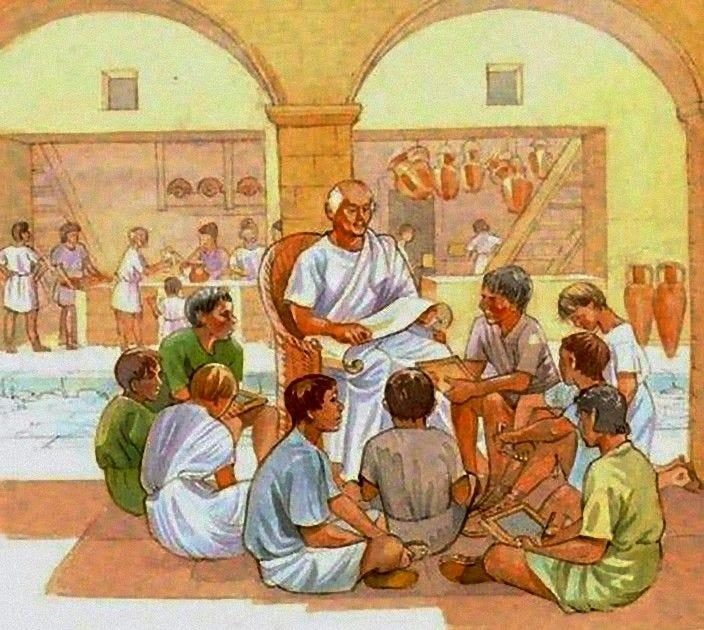
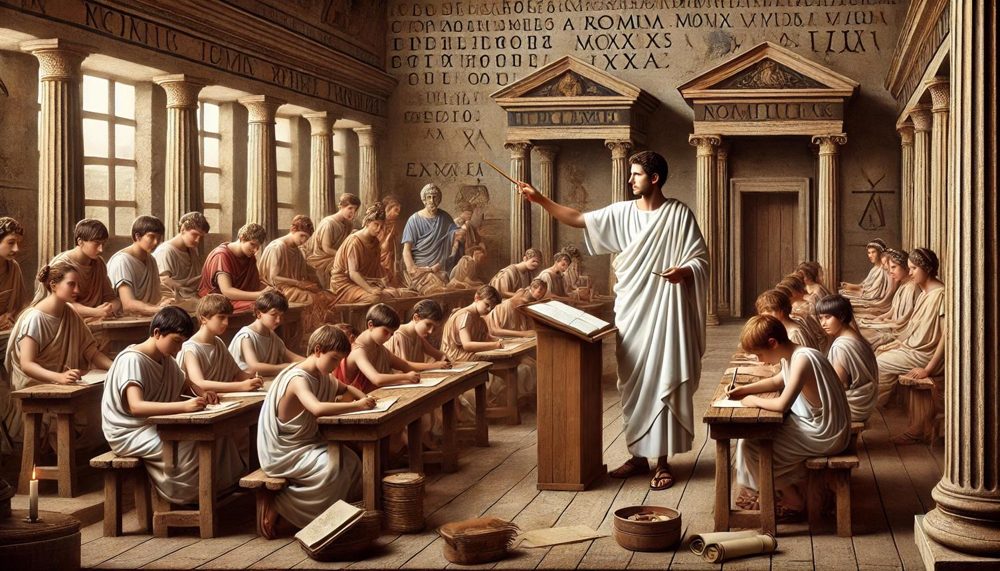
Roman education developed differently from Greek education but was strongly influenced by Greek intellectual traditions.
Education in Roman society varied according to class, gender, wealth, location, and period. There was no single standardized Roman school system equivalent to a modern national education system.
Nevertheless, Roman educational traditions developed recognizable stages.
A simplified model might include:
- early instruction in reading and writing;
- grammatical education;
- rhetorical education;
- advanced study for particular professions or intellectual pursuits.
The Roman educational tradition placed considerable importance upon language and rhetoric.
This made sense within Roman political and legal culture.
An individual who wanted to participate effectively in public life needed to communicate, argue, persuade, interpret texts, and understand law and civic traditions.
25. The Grammaticus
The grammaticus provided more advanced education than the elementary teacher.
Students studied language, literature, poetry, interpretation, and cultural knowledge.
The curriculum could involve detailed study of canonical authors.
Students did not merely read texts.
They analyzed language.
They learned vocabulary.
They interpreted passages.
They memorized.
They recited.
They discussed literary and rhetorical techniques.
This process again demonstrates that mastery requires repeated engagement with exemplary work.
Students learn not only through rules but through exposure to models.
26. The Rhetor
The rhetor occupied an important place in higher Roman education.
Rhetorical training prepared students for public speaking and civic participation.
Students practiced constructing arguments, organizing speeches, responding to objections, and adapting language to different audiences.
These skills remain relevant today.
Professionals must still:
- explain complex ideas;
- persuade responsibly;
- negotiate;
- present evidence;
- defend arguments;
- answer questions;
- and communicate with different audiences.
Modern presentation software has changed the medium.
The fundamental communication problem remains.
27. Cicero and the Educated Person
Marcus Tullius Cicero played a major role in Roman intellectual culture.
For Cicero, education was closely connected with eloquence, philosophy, civic responsibility, and public life.
The ideal orator required more than verbal technique.
An effective public speaker needed knowledge of human affairs, law, ethics, history, politics, and philosophy (Cicero, trans. 1942).
This idea is particularly relevant to professional mastery.
Communication divorced from knowledge can become manipulation.
Knowledge divorced from communication can remain inaccessible.
Mastery requires the ability to understand and communicate.
28. Roman Education and Character
Roman educational thought also connected learning with character.
The ideal educated person was expected to demonstrate qualities such as:
- discipline;
- self-control;
- duty;
- courage;
- civic responsibility;
- eloquence;
- judgment;
- and practical knowledge.
Quintilian's Institutio Oratoria provides one of the most extensive ancient discussions of education and rhetoric. Quintilian argued that the ideal orator should be a morally good person as well as an accomplished speaker (Quintilian, trans. 2002).
This principle is deeply relevant to the concept of mastery.
Technical excellence without character is incomplete mastery.
A brilliant speaker who deliberately deceives people cannot be regarded as the ideal rhetorician envisioned by this tradition.
Likewise, a highly skilled professional who abuses expertise for personal gain may possess technical ability without fulfilling the ethical responsibilities associated with professional mastery.
29. Apprenticeship in the Ancient World
Formal schools were only one part of ancient education.
Many forms of knowledge were transmitted through apprenticeship.
Crafts such as:
- metalworking;
- pottery;
- construction;
- textile production;
- agriculture;
- shipbuilding;
- medicine;
- and specialized religious practices
required practical knowledge that could not easily be acquired through written texts alone.
The apprentice watched.
Then the apprentice attempted the task.
The master corrected mistakes.
The apprentice repeated the process.
Over time, the learner moved from observation to participation and eventually toward independent performance.
This is a powerful model of experiential learning.
30. Tacit Knowledge
One of the most important things apprenticeships transmit is what later scholars would call tacit knowledge.
Michael Polanyi famously argued that people often know more than they can explicitly state (Polanyi, 1966).
A skilled craftsperson may not be able to articulate every micro-decision involved in producing excellent work.
An experienced teacher may sense that a class is losing attention before being able to explain exactly which signals triggered the perception.
An experienced surgeon may recognize a subtle pattern that comes from years of exposure.
An experienced manager may notice that an organizational problem is emerging before formal indicators become obvious.
Such knowledge develops through experience.
This is one reason apprenticeship remains valuable.
Some forms of mastery cannot be acquired simply by reading about them.
31. Oral Traditions
Before writing became widespread, oral traditions were fundamental to human knowledge transmission.
Even after writing emerged, oral teaching remained important.
Teachers used:
- storytelling;
- memorization;
- repetition;
- recitation;
- poetry;
- proverbs;
- songs;
- dialogue;
- ritual;
- and public performance.
Oral traditions are sometimes mistakenly regarded as inferior to written traditions.
That is too simplistic.
Oral cultures developed sophisticated methods for preserving knowledge.
Formulaic language, rhythm, repetition, narrative structure, communal recitation, and memorization could assist the preservation of long bodies of knowledge.
Walter J. Ong emphasized the profound differences between oral and literate modes of thought and communication (Ong, 1982).
Oral cultures often depended heavily upon memory.
This made the trained human mind itself a kind of living archive.
32. Memory as an Intellectual Technology
Modern people often underestimate the role of memory because digital devices can store enormous quantities of information.
Ancient learners did not have cloud storage.
They had brains.
Consequently, memorization was central to education.
Students learned texts.
Religious communities memorized scriptures.
Poets memorized compositions.
Speakers memorized speeches.
Apprentices memorized procedures.
Legal traditions could be preserved through trained human memory.
This does not mean that memorization alone constitutes mastery.
It does not.
But memory provides the foundation upon which higher-order thinking can operate.
A professional cannot critically evaluate knowledge that they cannot recognize.
A musician cannot improvise effectively without internalized musical patterns.
A mathematician needs foundational concepts readily available.
A language learner requires vocabulary.
Thus, the historical debate should not be framed as:
memorization versus understanding.
A more productive model is:
memorization → understanding → application → analysis → judgment → creation.
33. Jewish Rabbinical Schools and Traditions of Learning
7
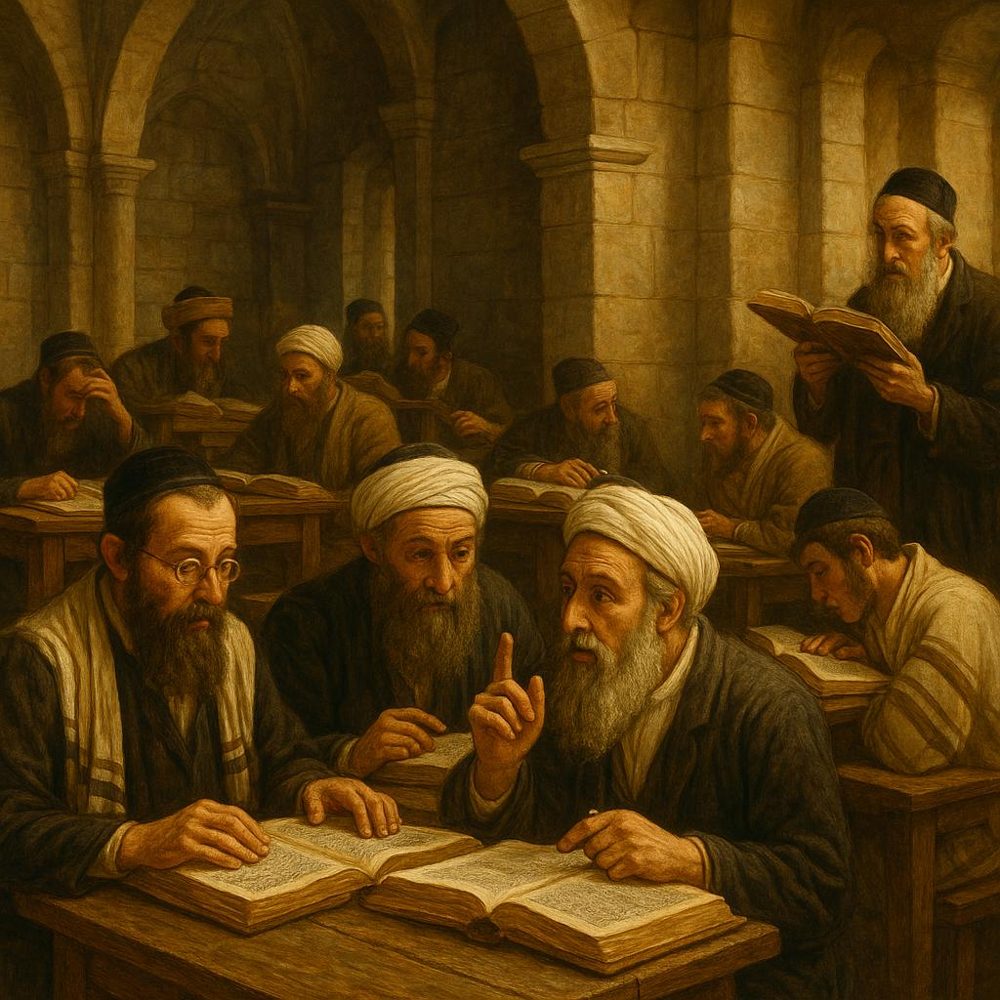
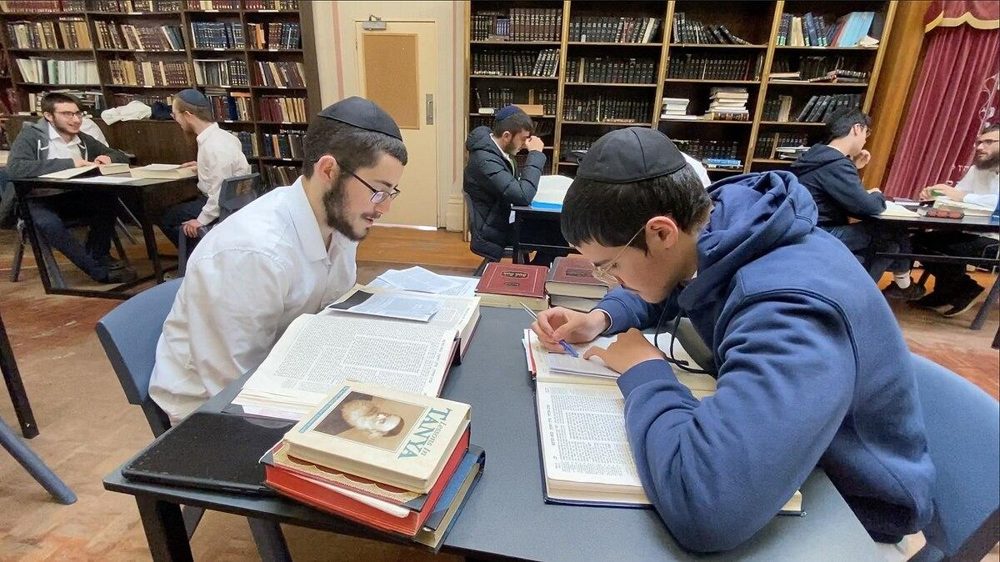
Jewish traditions of education provide another major example of sustained knowledge transmission before the emergence of medieval universities.
Jewish educational culture placed extraordinary importance on textual study, memorization, interpretation, debate, communal learning, and transmission between generations.
The Torah occupied a central position, while later Jewish scholarship developed extensive traditions of interpretation and legal reasoning.
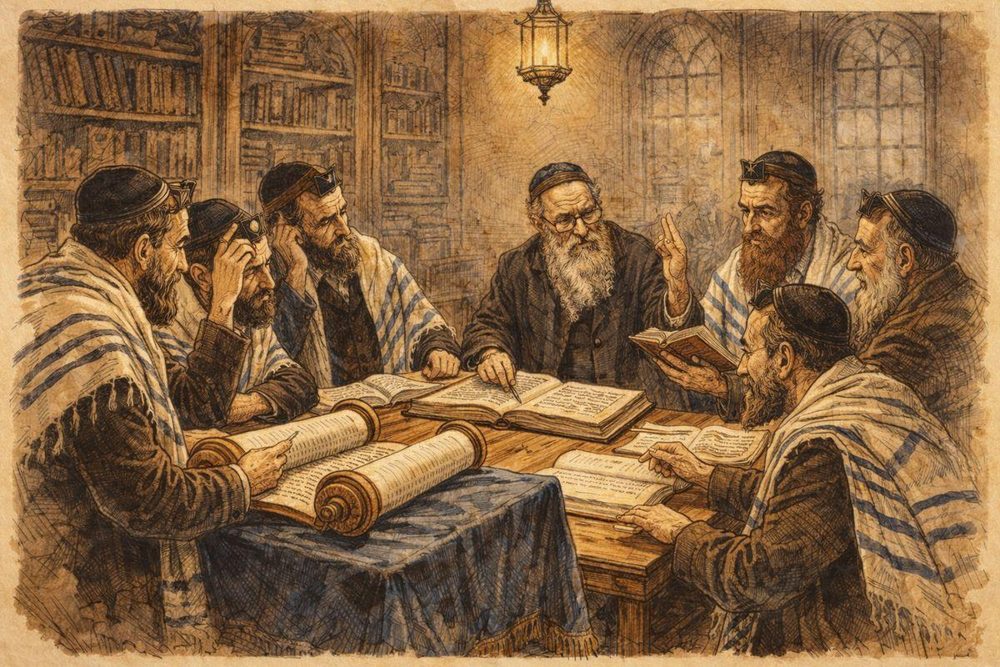
The development of rabbinical learning environments and the beit midrash, or house of study, illustrates an educational culture centered upon sustained engagement with authoritative texts.
34. The Teacher-Student Relationship in Jewish Learning
The rabbi was not simply a lecturer.
Learning frequently involved close engagement between teacher and students.
Students listened.
They questioned.
They debated.
They memorized.
They interpreted.
They compared different positions.
They developed arguments.
This tradition helped produce a distinctive intellectual culture in which disagreement could itself become part of the learning process.
The later Talmudic tradition preserves extensive records of disagreements among scholars.
These disagreements are educationally significant.
They demonstrate that knowledge can develop through structured intellectual disagreement rather than through the elimination of disagreement.
A student learns not merely:
"What is the answer?"
but also:
"Why did another scholar reach a different conclusion?"
That question is fundamental to advanced scholarship.
35. The Talmudic Model of Intellectual Engagement
The Mishnah and later Gemara developed a vast corpus of legal, ethical, interpretive, and intellectual discussion.
The Talmud is not simply a book of answers.
Its pages preserve arguments, questions, counterarguments, interpretations, precedents, objections, and alternative possibilities.
This creates a distinctive model of learning.
The learner encounters:
claim → objection → response → counter-objection → interpretation → refinement.
That structure resembles many modern scholarly practices.
Academic researchers read competing theories.
Researchers evaluate evidence.
Scholars identify weaknesses.
They respond to criticisms.
They revise arguments.
Peer review performs a similar function in modern academic culture.
The intellectual principle is enduring:
Knowledge becomes stronger when claims are subjected to disciplined questioning.
36. Oral and Written Transmission in Jewish Scholarship
Jewish intellectual traditions also demonstrate that oral and written transmission can work together.
Texts preserve accumulated knowledge.
Teachers interpret those texts.
Students memorize and discuss them.
Communities preserve traditions.
Later scholars write commentaries.
Those commentaries become objects of further study.
This creates a cumulative chain:
Teacher → Student → Interpretation → Commentary → New Student → New Interpretation
Knowledge therefore becomes generational.
The student does not simply inherit knowledge.
The student becomes a potential transmitter of that knowledge.
Eventually, the student may become a teacher.
This is one of the deepest characteristics of mastery.
The master creates new masters.
37. Apprenticeship as a Universal Educational Pattern
Although Egyptian scribal education, Mesopotamian schools, Greek philosophical communities, Roman rhetorical education, and Jewish rabbinical learning differed considerably, they share several characteristics.
1. A recognized body of knowledge
Learners were not starting from nothing.
They entered traditions.
2. A teacher or master
Knowledge was often embodied in people.
3. Repetition
Learners practiced.
4. Correction
Teachers identified errors.
5. Memory
Important knowledge was internalized.
6. Application
Knowledge was used in real contexts.
7. Community
Learning occurred within social groups.
8. Identity
Education helped transform learners into members of a profession, intellectual community, or religious tradition.
9. Responsibility
Knowledge often carried obligations.
10. Transmission
The learner eventually became capable of transmitting knowledge to others.
These ten characteristics provide a useful historical foundation for a modern theory of mastery.
38. The Master Teacher
Across ancient civilizations, the teacher could occupy a position of extraordinary importance.
The teacher was not merely a service provider.
The teacher was often:
- a guardian of knowledge;
- an interpreter;
- a role model;
- a disciplinarian;
- a mentor;
- an evaluator;
- a guide;
- and eventually a predecessor whom the student might surpass.
This last point is especially important.
A successful teacher does not create permanent dependence.
A successful teacher develops independence.
The apprentice should eventually be able to perform without the master.
The student should eventually be able to reason independently.
The scholar should eventually produce original work.
The teacher's success can therefore be measured partly by the intellectual independence of the student.
39. The Master as Model
Ancient education often relied upon imitation.
Students observed the behavior of masters.
They learned not only formal rules but also professional habits.
A young rhetorician observed experienced speakers.
A craft apprentice observed the craftsperson.
A religious student observed the teacher's practices.
A philosophical student observed how the teacher questioned assumptions.
This illustrates another component of mastery:
People learn practices by watching practices being performed.
Written instructions cannot always capture everything that an expert does.
A master demonstrates.
The student observes.
The student imitates.
The student receives correction.
The student eventually adapts the technique.
This remains the foundation of many professional training systems today.
40. Knowledge Transmission Is Not Neutral
It is important, however, not to romanticize ancient education.
Ancient educational systems reflected the inequalities and assumptions of their societies.
Access to education could be restricted.
Women were often excluded from forms of formal education available to elite men, although the degree of exclusion varied considerably by culture and period.
Slavery shaped ancient economies.
Social class influenced educational opportunities.
Citizenship influenced access to civic education.
Religious identity could influence access to particular traditions.
Therefore, the history of mastery is also a history of who was permitted to become a master.
This question is essential for contemporary education.
If knowledge is power, access to knowledge is a question of social organization.
Modern societies have dramatically expanded educational access compared with many ancient societies, but inequalities remain.
Consequently, the pursuit of mastery must be accompanied by attention to educational opportunity and inclusion.
41. The Limits of Ancient Knowledge
Ancient intellectual achievements were extraordinary, but ancient knowledge also had significant limitations.
Many ancient explanations of nature were later shown to be incorrect.
Medical theories sometimes rested on inadequate biological understanding.
Astronomical models were eventually replaced.
Social theories often reflected assumptions about hierarchy that modern societies reject.
Scientific methodology had not yet developed into the systematic experimental and statistical traditions of modern science.
This teaches another important lesson:
Mastery does not guarantee infallibility.
A master can still be wrong.
A civilization can preserve knowledge for centuries and still preserve errors.
A respected teacher can transmit an incorrect assumption.
A widely accepted theory can later be replaced.
This is why advanced education must include mechanisms for correction.
42. Knowledge Must Be Tested
The history of knowledge demonstrates a fundamental principle:
Transmission alone does not guarantee truth.
Knowledge must be tested.
Arguments must be examined.
Evidence must be evaluated.
Methods must be scrutinized.
Claims must be challenged.
This is one reason philosophy, mathematics, textual criticism, observation, debate, and eventually experimental science became so important.
Mastery therefore requires both:
preservation
and
criticism.
Without preservation, knowledge disappears.
Without criticism, errors become traditions.
A mature intellectual culture needs both.
43. From Tradition to Inquiry
The ancient world demonstrates a gradual but uneven movement from simple preservation toward systematic inquiry.
The scribe preserves.
The teacher interprets.
The philosopher questions.
The scholar compares.
The mathematician proves.
The observer investigates.
The critic evaluates.
The researcher creates.
These roles overlap.
They should not be treated as a simplistic linear progression.
Nevertheless, the historical development illustrates an important educational transformation.
Human beings gradually developed increasingly sophisticated ways of asking not only:
"What have we inherited?"
but:
"Is what we have inherited correct?"
and eventually:
"What new knowledge can we create?"
44. The Birth of Intellectual Communities
The Academy, Lyceum, Alexandrian scholarly institutions, Roman rhetorical schools, scribal schools, and Jewish houses of study all demonstrate another feature of mastery:
great learning is rarely purely individual.
Intellectual communities create environments where knowledge can be:
- discussed;
- challenged;
- preserved;
- corrected;
- expanded;
- and transmitted.
This remains true today.
Universities are intellectual communities.
Research laboratories are intellectual communities.
Professional associations are intellectual communities.
Doctoral programs are intellectual communities.
Online scholarly communities can also function this way.
Technology has changed the location of learning, but not the fundamental human need for communities of inquiry.
45. The Teacher as Gatekeeper and Gateway
Historically, teachers performed two apparently contradictory roles.
They were gatekeepers because they controlled access to specialized knowledge.
But they were also gateways because they opened access to knowledge that the learner could not easily obtain independently.
This dual role carries responsibility.
A master can empower a student.
A master can also unnecessarily restrict knowledge.
Modern educational institutions therefore face an important ethical question:
How should expertise be protected without turning expertise into unnecessary exclusion?
Professional standards are necessary.
Not everyone should practice every profession without training.
But education should ultimately enable capable learners to develop independence rather than creating permanent dependence upon authorities.
46. Mastery and the Transformation of Identity
Ancient education was frequently transformational.
The learner entered as a novice.
The learner gradually became competent.
Competence became professional identity.
Eventually, the individual could become a teacher.
This process can be described as:
Novice → Apprentice → Practitioner → Expert → Master → Teacher
The stages are not rigid.
But the underlying developmental pattern is powerful.
Mastery is therefore not merely about accumulating knowledge.
It is about becoming.
The student becomes a mathematician.
The apprentice becomes a craftsperson.
The learner becomes a scholar.
The disciple becomes a teacher.
The professional becomes a mentor.
The transformation is both intellectual and social.
47. The Importance of Practice
One of the clearest lessons from ancient education is that knowledge requires practice.
A person can read about architecture without being able to construct a building.
A person can memorize medical texts without becoming a competent physician.
A person can read philosophical arguments without becoming skilled at philosophical reasoning.
A person can study rhetoric without becoming an effective speaker.
A person can read religious texts without necessarily understanding how to teach them responsibly.
Knowledge becomes capability through practice.
This principle remains one of the central themes of mastery-oriented education.
48. Reflection and Mastery
Practice alone is not enough.
The learner must also reflect.
Why did the method work?
Why did it fail?
What assumption was incorrect?
What could be improved?
What happened that was unexpected?
What did the master do differently?
Reflection transforms experience into learning.
This principle is visible in philosophical dialogue, apprenticeship, textual commentary, rhetorical critique, and professional training.
It also anticipates modern concepts of reflective practice developed by scholars such as Donald Schön (1983).
Professionals often operate in situations where formal rules are insufficient.
They must reflect on what happened and modify future action.
That is practical mastery.
49. The Ancient Foundations of Lifelong Learning
The concept of lifelong learning also has ancient roots.
Philosophers continued studying throughout their lives.
Religious scholars continued interpreting texts.
Craftspeople continued refining techniques.
Physicians continued learning from cases.
Administrators accumulated experience.
Teachers continued teaching and learning from students.
Mastery therefore was rarely understood as something achieved once and then permanently completed.
Experience deepened competence.
New problems required new responses.
New students required new explanations.
New evidence required new interpretations.
This is the foundation of lifelong learning.
50. What Ancient Education Can Teach the AI Age
The historical distance between ancient scribes and modern AI professionals is enormous.
Yet there are surprising similarities.
Ancient scribes faced a problem of information management.
Modern organizations face an even larger one.
Ancient scholars needed to determine whether texts were reliable.
Modern researchers must evaluate digital sources and AI-generated material.
Ancient teachers transmitted specialized knowledge.
Modern universities and professional communities do the same.
Ancient apprentices learned by observing masters.
Modern professional education continues to use mentoring and supervised practice.
Ancient philosophers questioned assumptions.
Modern researchers use critical inquiry.
Ancient communities relied upon memory.
Modern society relies upon digital storage but still requires human understanding.
The technologies have changed.
The fundamental educational challenge remains.
51. From the Tablet to the Database
The ancient clay tablet and the modern digital database belong to radically different technological worlds.
Yet both solve a similar problem:
How do humans preserve information beyond the immediate moment?
The tablet preserved a transaction.
The papyrus preserved a text.
The manuscript preserved an argument.
The printed book multiplied knowledge.
The database organizes enormous quantities of information.
Cloud storage makes information accessible across geographical boundaries.
Artificial intelligence can process and generate information at unprecedented speed.
Each technological development increases the scale of information.
But none eliminates the need for judgment.
Indeed, the more information becomes available, the more important judgment becomes.
52. From the Master Scribe to the Knowledge Worker
The ancient scribe can be viewed as an early form of specialized knowledge worker.
Scribes possessed skills unavailable to much of the population.
They operated administrative systems.
They managed information.
They maintained records.
They supported institutions.
They preserved knowledge.
Modern knowledge workers perform analogous functions at dramatically greater scale.
Researchers, analysts, programmers, accountants, engineers, consultants, educators, administrators, lawyers, and managers all work with information and knowledge.
The difference is that modern knowledge workers operate within vastly more complex technological systems.
This makes mastery increasingly important.
53. Why the University Was Eventually Necessary
If sophisticated learning already existed in ancient civilizations, why did universities eventually emerge?
The answer lies partly in scale and specialization.
As knowledge expanded, societies required institutions capable of:
- organizing disciplines;
- preserving texts;
- training professionals;
- certifying competence;
- supporting research;
- establishing scholarly communities;
- and creating systems for advanced instruction.
The medieval university did not appear from nothing.
It inherited elements from many earlier traditions.
Its emergence represents another stage in the long institutional history of mastery.
The university became a mechanism for organizing advanced knowledge on a more systematic basis.
But it inherited its fundamental mission from much older traditions:
to preserve knowledge, teach learners, cultivate intellectual capacities, and contribute to human understanding.
54. The Long Genealogy of Mastery
The history developed in this chapter can therefore be represented as a long genealogy:
Oral tradition
↓
Apprenticeship
↓
Scribal education
↓
Philosophical schools
↓
Scholarly institutions and libraries
↓
Religious houses of learning
↓
Professional schools
↓
Universities
↓
Research universities
↓
Digital learning
↓
AI-augmented learning
Each stage adds new possibilities.
None completely eliminates the previous stage.
Modern education still uses oral teaching.
Modern professions still use apprenticeship.
Modern universities still depend upon books.
Modern research still requires communities.
Modern AI still requires human judgment.
55. The Seven Foundations of Ancient Mastery
From the civilizations examined in this chapter, seven foundational principles emerge.
Foundation One: Knowledge Must Be Preserved
Egyptian and Mesopotamian scribes demonstrate the importance of recording knowledge.
Foundation Two: Knowledge Must Be Organized
Mesopotamian lists, Alexandrian scholarship, and Greek classification demonstrate the importance of structure.
Foundation Three: Knowledge Must Be Practiced
Apprenticeships demonstrate that knowledge becomes skill through application.
Foundation Four: Knowledge Must Be Questioned
Socratic dialogue and philosophical debate demonstrate the importance of critical inquiry.
Foundation Five: Knowledge Must Be Transmitted
Teachers, rabbis, scribes, philosophers, and apprentices demonstrate the generational nature of learning.
Foundation Six: Knowledge Requires Judgment
Aristotle's practical wisdom demonstrates that knowing rules is insufficient without contextual judgment.
Foundation Seven: Knowledge Must Eventually Become Contribution
The highest form of learning occurs when students become capable of teaching, researching, creating, and extending knowledge.
These seven foundations will reappear throughout the remainder of this book.
56. Mastery Is More Than Information
The ancient world provides an especially powerful warning against reducing education to information.
A Mesopotamian student might memorize hundreds of signs.
But mastery required the ability to use them.
A Greek student might memorize philosophical propositions.
But mastery required reasoning.
A Roman student might memorize rhetorical techniques.
But mastery required persuasive communication.
A Jewish student might memorize extensive texts.
But mastery involved interpretation and debate.
An Egyptian scribe might learn administrative formulas.
But mastery required accurate professional performance.
Thus, across cultures, education repeatedly moved beyond information toward competence, judgment, identity, and responsibility.
57. The Teacher-Student Chain
Perhaps the most beautiful feature of ancient educational culture is the chain of transmission.
A teacher receives knowledge from previous teachers.
The teacher learns.
The teacher practices.
The teacher develops expertise.
The teacher teaches a student.
The student learns.
The student questions.
The student develops.
The student becomes a teacher.
The chain continues.
This creates a civilization of accumulated knowledge.
Each generation receives something.
Each generation modifies something.
Each generation transmits something.
Human civilization therefore becomes a long conversation between generations.
58. Mastery and Humility
Ancient philosophical traditions also remind us that mastery should produce humility.
The more deeply a person investigates reality, the more complex reality can appear.
Socratic philosophy is particularly relevant here.
Recognizing ignorance is not the opposite of learning.
It can be the beginning of learning.
The master therefore does not necessarily say:
"I know everything."
The master says:
"I know what I know, I recognize what I do not know, and I know how to investigate what remains uncertain."
This principle is exceptionally important in the contemporary information age.
Artificial intelligence can produce confident answers.
Search engines can produce millions of results.
Social media can produce millions of opinions.
The master asks:
What is actually known?
What is uncertain?
What is evidence?
What remains to be investigated?
59. The Difference Between Authority and Wisdom
Ancient education also reveals a distinction between authority and wisdom.
A teacher may possess authority because of position.
A scholar may possess authority because of reputation.
A text may possess authority because a community regards it as authoritative.
But authority does not automatically establish truth in every possible question.
Wisdom requires judgment.
This distinction is crucial for modern educational institutions.
Students should respect expertise.
But they should also learn how to evaluate arguments.
The goal is not blind obedience.
The goal is intellectually responsible participation.
60. What the Ancient World Did Not Have
The ancient world did not have:
- modern universities;
- standardized doctoral degrees;
- peer-reviewed journals in the modern sense;
- digital databases;
- statistical software;
- artificial intelligence;
- global online classrooms;
- massive open online courses;
- modern laboratories;
- or instant global communication.
Yet it possessed something that remains essential:
people committed to learning and people committed to teaching.
The technologies of education can change dramatically.
The human foundations remain remarkably stable.
61. The Central Lesson
The central lesson of this chapter can therefore be expressed simply:
Mastery existed before the university because mastery is older than educational institutions.
The university institutionalized certain forms of mastery.
It did not create the human desire to become masterful.
That desire existed in the ancient scribe who wanted to write accurately, the apprentice who wanted to master a craft, the philosopher who wanted to understand truth, the mathematician who wanted to prove a proposition, the physician who wanted to understand disease, the rabbi who wanted to interpret tradition, and the teacher who wanted to prepare the next generation.
The university inherited this ancient responsibility.
Modern education must decide how to carry it forward.
62. From Ancient Masters to Modern Learners
The contemporary learner stands in an extraordinary position.
A modern student can access more information in one afternoon than an ancient scholar might have encountered in an entire lifetime.
But information abundance creates a new danger.
The learner may mistake access for understanding.
A search result may be mistaken for knowledge.
A certificate may be mistaken for competence.
A fluent AI answer may be mistaken for truth.
A large bibliography may be mistaken for scholarship.
A professional title may be mistaken for mastery.
The ancient traditions examined in this chapter remind us that genuine mastery requires much more.
It requires:
study, practice, questioning, discipline, reflection, community, responsibility, and continued learning.
63. A Framework for the Modern Mastery Journey
The lessons of ancient civilizations can be translated into a contemporary framework:
Stage 1 — Encounter
The learner encounters information.
Stage 2 — Memorize
Essential concepts become available in memory.
Stage 3 — Understand
The learner recognizes meaning and relationships.
Stage 4 — Practice
Knowledge is applied.
Stage 5 — Receive Feedback
Errors are identified.
Stage 6 — Reflect
The learner considers why performance succeeded or failed.
Stage 7 — Integrate
Knowledge from multiple areas is connected.
Stage 8 — Exercise Judgment
The learner applies knowledge to unfamiliar circumstances.
Stage 9 — Create
The learner produces something new.
Stage 10 — Teach
The learner helps others develop.
Stage 11 — Contribute
The learner adds to the wider body of knowledge or practice.
Stage 12 — Renew
The master continues learning.
This final stage is essential.
Mastery is never finished.
64. Conclusion: Before the University, There Was the Master
The history of education did not begin with the university.
It began with human beings trying to ensure that important knowledge would survive them.
Parents taught children.
Elders taught younger generations.
Craftspeople trained apprentices.
Scribes taught scribes.
Philosophers taught students.
Rabbis taught learners.
Scholars worked in intellectual communities.
Teachers transmitted accumulated wisdom.
Students practiced.
Generations followed generations.
Ancient Egypt developed systems of scribal learning and administrative knowledge. Mesopotamia developed remarkable traditions of writing, mathematics, classification, and scholarly education. Greece transformed education into a philosophical question and produced intellectual institutions such as Plato's Academy and Aristotle's Lyceum. Alexandria developed a major environment for scholarship, textual criticism, mathematics, astronomy, and scientific inquiry. Rome developed educational traditions centered upon language, rhetoric, law, civic participation, and character. Jewish traditions developed powerful systems of textual study, memorization, interpretation, debate, and generational transmission.
These civilizations were very different.
Their educational systems had limitations.
Their societies were unequal.
Their knowledge contained errors.
Their institutions cannot simply be copied into the modern world.
But together they demonstrate a fundamental truth:
Human civilization advances because knowledge is transmitted, questioned, practiced, refined, and passed forward.
The modern university is one of the greatest institutional expressions of this process.
But the university is not the beginning of mastery.
It is one chapter in a much longer story.
That story begins with the teacher and the learner.
It begins with the master and the apprentice.
It begins with the question:
"What do we know?"
Then:
"How do we know it?"
Then:
"Can we teach it to another?"
And eventually:
"Can the next generation take what we have learned and go further?"
That final question is the foundation upon which civilization itself is built.
The ancient master did not merely possess knowledge.
The master carried a responsibility:
to preserve what was valuable, correct what was mistaken, develop what was incomplete, and prepare another generation to continue the journey.
That responsibility remains with us.
And as this book moves from the ancient world toward the emergence of universities, modern professions, research institutions, digital learning, and artificial intelligence, one principle will remain constant:
The purpose of education is not merely to fill the mind with information. It is to cultivate the capacity to understand, practice, judge, create, teach, and contribute.
That is the birth of mastery.
And it occurred long before the first university opened its doors.